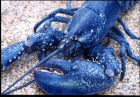
Reproduction of Yabby ( Cherax destructor - Blue pearl Crayfish )
Reproduction in yabbies is primarily related to water temperature and day length. Research has shown that mating begins in the spring and early summer when water temperatures reach above 15 C and day length has increased. Spawning reaches its peak between October and January. Females often spawn two or more times in the one season.
During spawning, the male yabby places a spermatophore between the female’s fourth and fifth pair of walking legs. The female breaks open the spermatophore and mixes the sperm with the eggs she expels. The fertilised eggs are placed within the “brood chamber” where they become firmly attached to the pleopods.
Fertilised eggs may be identified by their colour. Approximately 2 mm in length and oval in shape, the fertilised eggs are usually olive green in colour. The number of fertilised eggs carried by the female ranges from 100 to 300 for a young female, to more than 1000 for an older (larger) females.
A female carrying eggs beneath her tail is said to be in “berry”. A berried female will actively work to keep eggs cleaned and well oxygenated, removing any mortalities or foreign particles with her fifth pereiopods. As the eggs develop they undergo a series of larval stages, taking approximately 19 to 40 days to hatch. The length of time taken for the eggs to hatch is entirely dependent on temperature. In water temperatures of 20 C , the eggs will hatch within 40 days. As temperature increases, the length of time taken to hatch will decrease until water temperatures reach 30 C. Temperatures above 30 C will adversely affected both the adult and the juvenile. The young remain within the “brood chamber” after hatching from the eggs for a number of weeks, undergoing three distinct larval phases before emerging as juvenile yabbies. Once the young leave the female, she is immediately able to spawn again, if environmental conditions permit.
ยังไงก็ขอหยิบ Text เฉพาะในส่วนของการผสมพันธุ์มาให้นะครับ
***********************************************
Reproduction of Yabby ( Cherax destructor - Blue pearl Crayfish )
Reproduction in yabbies is primarily related to water temperature and day length. Research has shown that mating begins in the spring and early summer when water temperatures reach above 15 C and day length has increased. Spawning reaches its peak between October and January. Females often spawn two or more times in the one season.
During spawning, the male yabby places a spermatophore between the female’s fourth and fifth pair of walking legs. The female breaks open the spermatophore and mixes the sperm with the eggs she expels. The fertilised eggs are placed within the “brood chamber” where they become firmly attached to the pleopods.
Fertilised eggs may be identified by their colour. Approximately 2 mm in length and oval in shape, the fertilised eggs are usually olive green in colour. The number of fertilised eggs carried by the female ranges from 100 to 300 for a young female, to more than 1000 for an older (larger) females.
A female carrying eggs beneath her tail is said to be in “berry”. A berried female will actively work to keep eggs cleaned and well oxygenated, removing any mortalities or foreign particles with her fifth pereiopods. As the eggs develop they undergo a series of larval stages, taking approximately 19 to 40 days to hatch. The length of time taken for the eggs to hatch is entirely dependent on temperature. In water temperatures of 20 C , the eggs will hatch within 40 days. As temperature increases, the length of time taken to hatch will decrease until water temperatures reach 30 C. Temperatures above 30 C will adversely affected both the adult and the juvenile. The young remain within the “brood chamber” after hatching from the eggs for a number of weeks, undergoing three distinct larval phases before emerging as juvenile yabbies. Once the young leave the female, she is immediately able to spawn again, if environmental conditions permit.



 หน้าหลัก
 ค้นหา
ค้นหา บทความ
 คำนวณ
คำนวณ ล๊อกอิน
 สมัครสมาชิก
 Sat 05/Sep/2026